

Commissioned by the Oregon Museum of Science and Industry (OMSI) as part of the new permanent exhibition Climate of Change in its newly renovated Nancy Stueber Natural Sciences Hall, Tellart designed Sit Spot – Reconnecting with the Living World: an immersive media installation inspired by the landscapes, and ecosystems of the Pacific Northwest. Conceived as both emotionally resonant and scientifically grounded, the experience invites guests to sense their interdependence with the living world. Guests move through a continuous cycle of environments where sound, illustrated visuals, and generative particle systems respond to movement, and deepen through stillness.
To create something truly rooted in place, Tellart began with immersion. The team traveled to Oregon to experience the region first-hand, hiking through forests, along the coast, and into the mountains, observing how weather, scale, and seasonal rhythm shape the Pacific Northwest. Alongside this environmental research, the team engaged Indigenous voices and academic perspectives through conversations and open-end interviews.
The conceptual foundation of the installation draws from the practice known as Sit Spot, an Indigenous and nature-based learning practice of returning to the same place over time to observe, listen, and build relationships with the land. Rather than extracting information, the practice cultivates attention. Through patient presence, subtle patterns begin to emerge: shifts in light, changes in sound, movements easily overlooked in passing.
Guided by Indigenous advisors and the OMSI research team, the installation translates the ethos of Sit Spot into a spatial medium, inviting visitors to practice attentiveness and relational awareness through immersive technology and narrative.
This intent led to one of the project’s core design principles: stillness. Museums are often built around movement. Guests circulate quickly, children run between exhibits, and screens compete for attention. For OMSI, we chose to design against that momentum. Connecting with the natural world requires a recalibration of time, and we felt that deeply in the Pacific Northwest. By waiting for the scenes to adjust to the scale of a forest or the rhythm of the water, stillness becomes a form of active participation, making space for relationships and patterns to unfold over time.
The Sit Spot – Reconnecting with the Living World installation treats stillness as interaction. Movement activates the environment and stirs its surface, but when guests slow down, deeper responses begin to emerge. The landscape gathers around them. Hidden structures brighten. Subtle motions become visible. The system responds to sustained attention by revealing quiet vitality, echoing how ecological networks in the Pacific Northwest cannot be grasped instantly, but become legible through time, patience, and presence. The experience also makes stillness communal. When multiple guests pause together, connections appear between them, turning the shared act of attention into a visible expression of interdependence.
The installation consists of floor and ceiling projections that cycle through five distinct Pacific Northwest environments – forest, mountain, ocean, desert, and urban – in a continuous journey visitors can enter at any moment. Each chapter lasts roughly two minutes, forming a ten-minute loop. A shared particle language runs through every scene, acting as a connective visual thread for mist, rain, snow, and currents across landscapes. As the environments shift, the intent remains constant: to make invisible relationships visible, and to help visitors feel connection with the living world through light, sound, and scale.
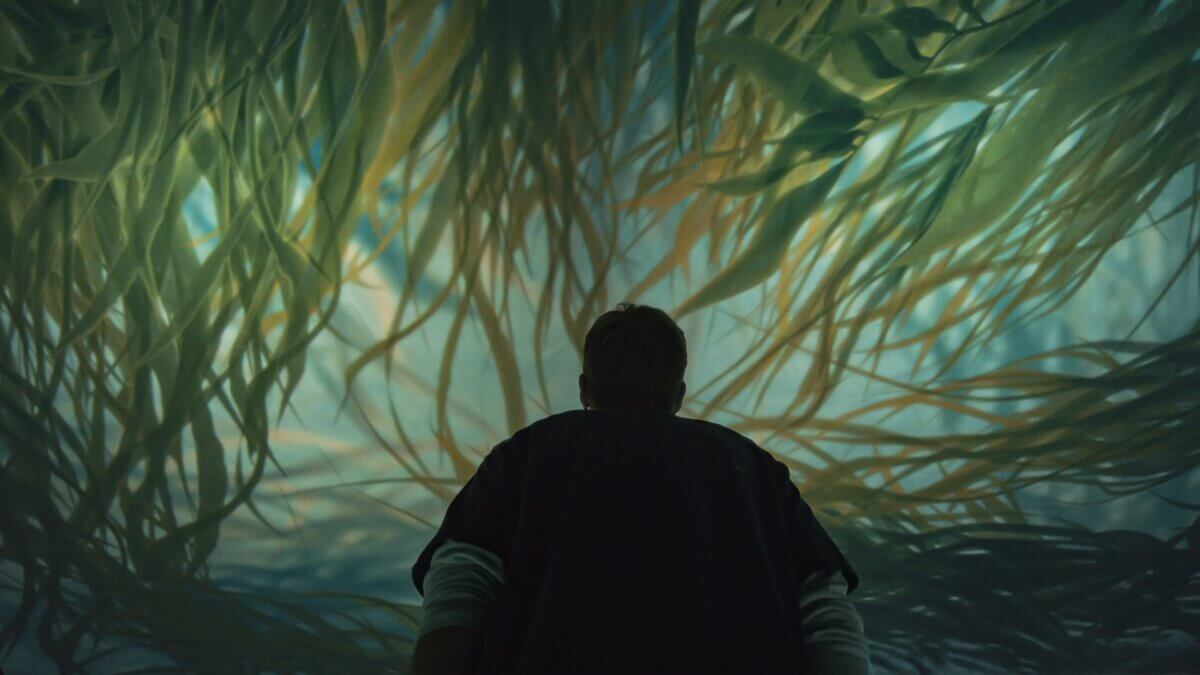
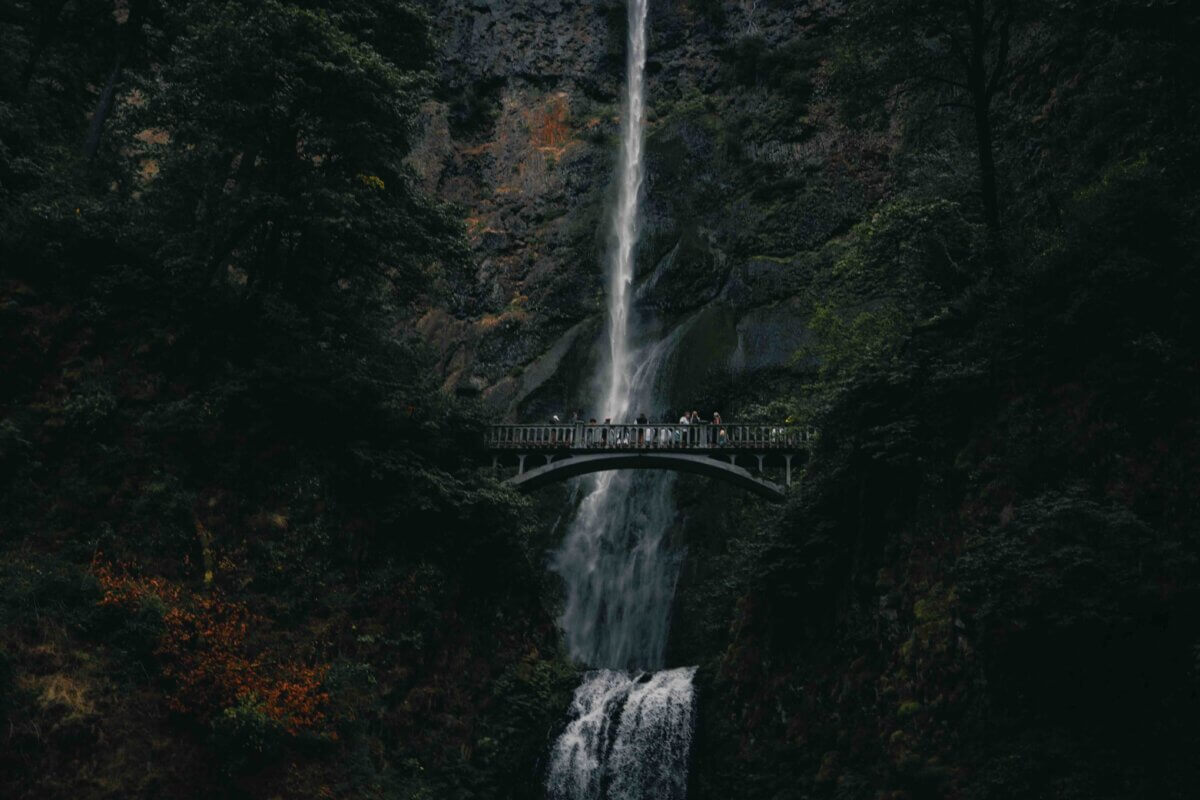
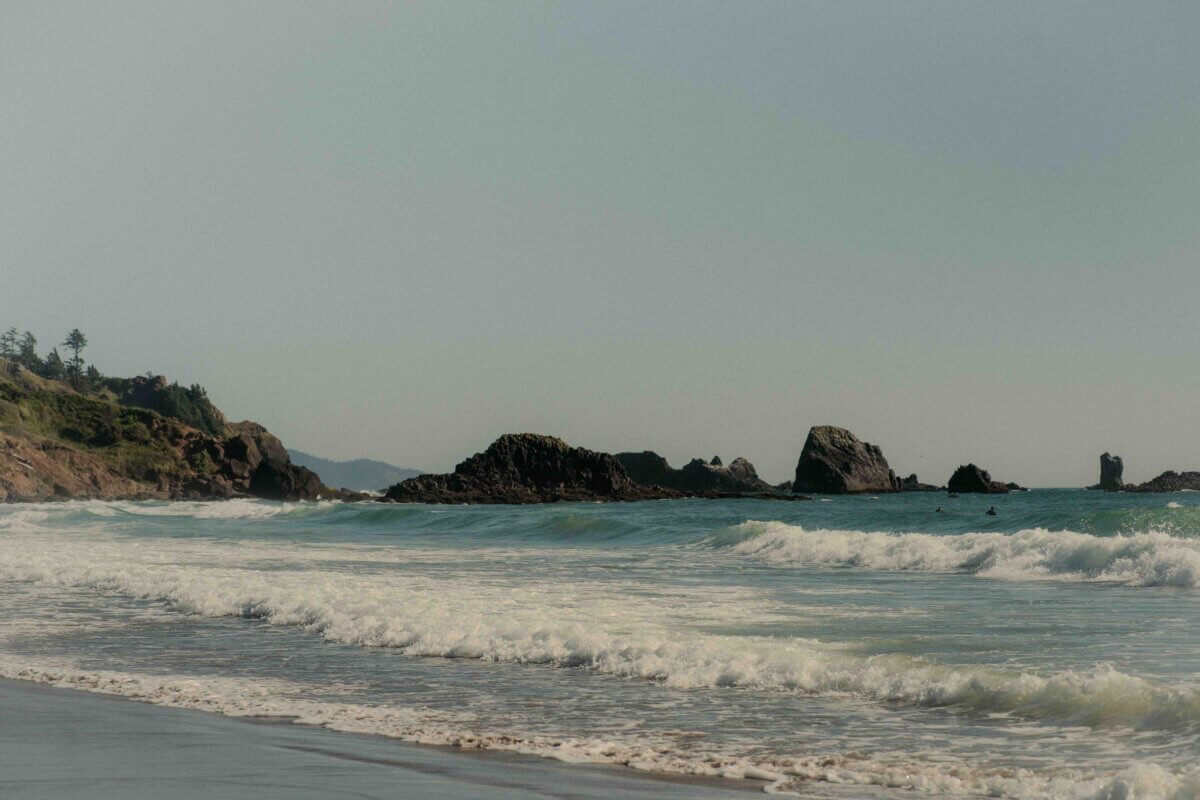
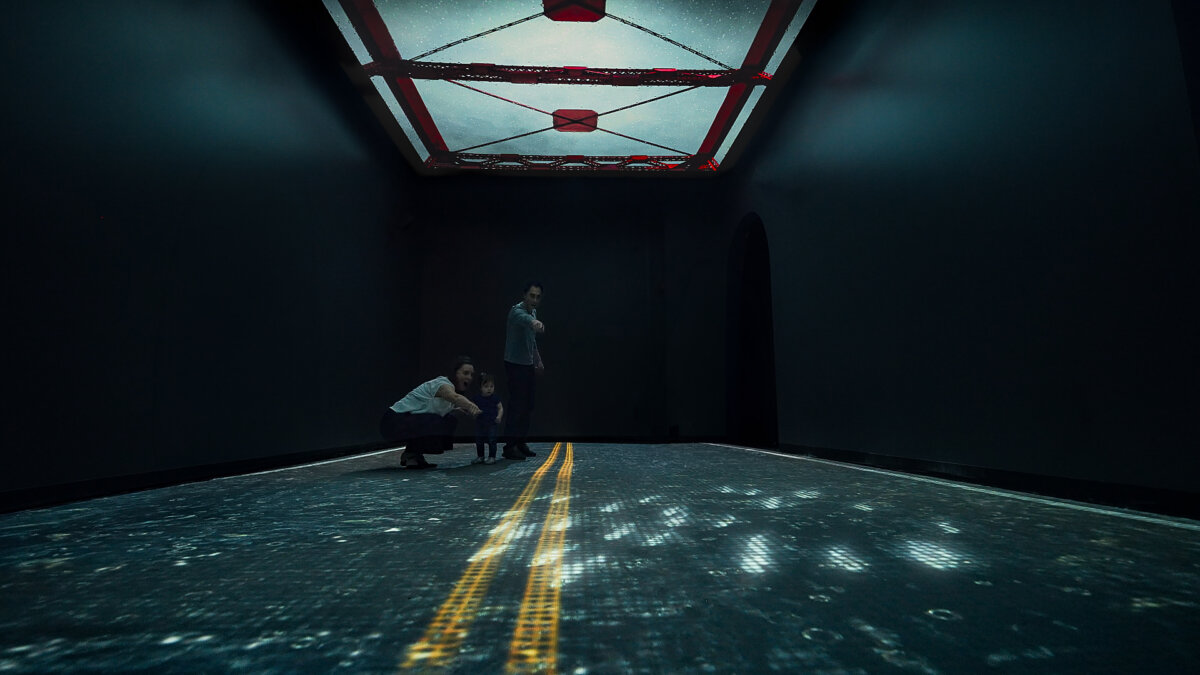
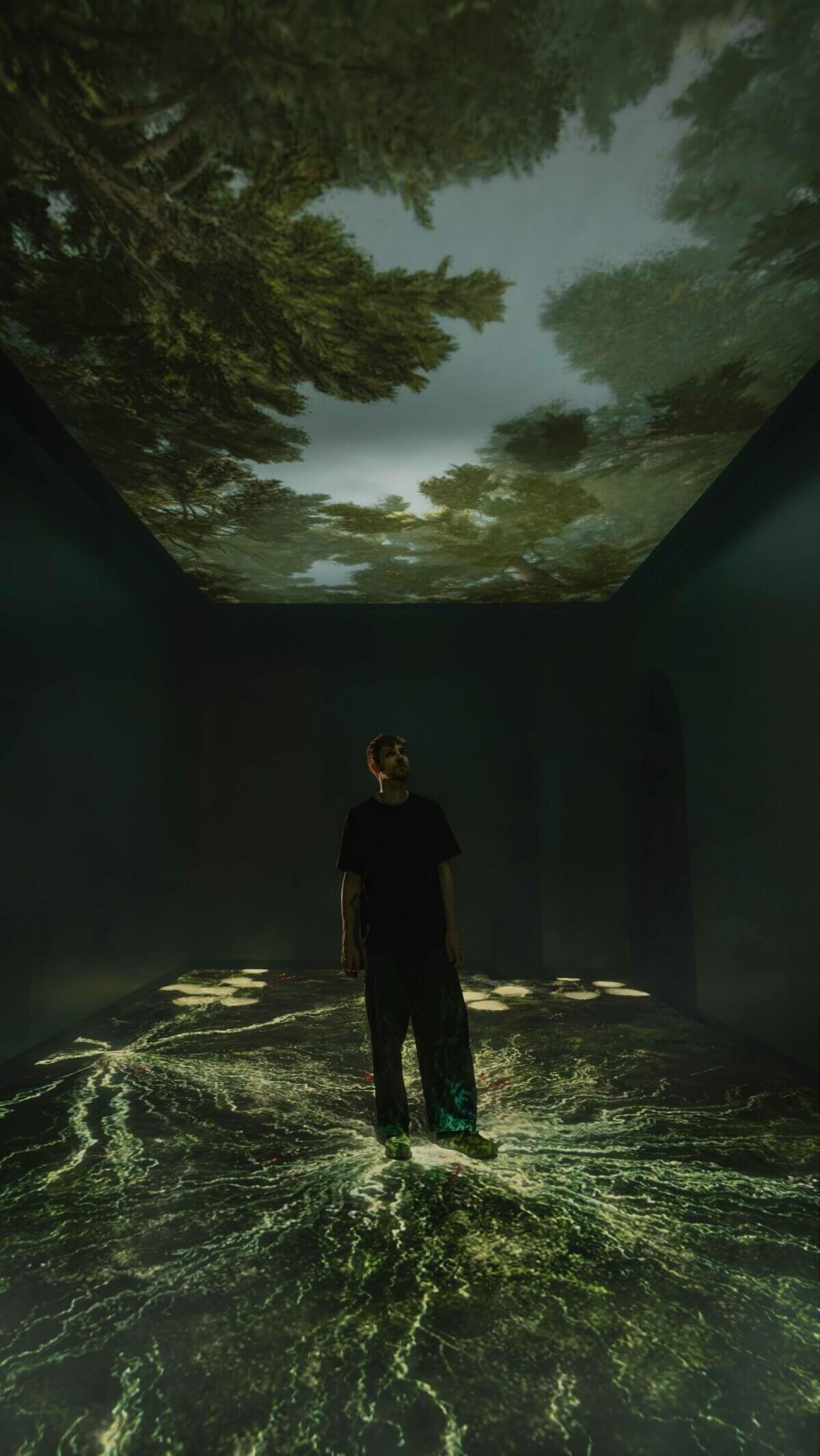
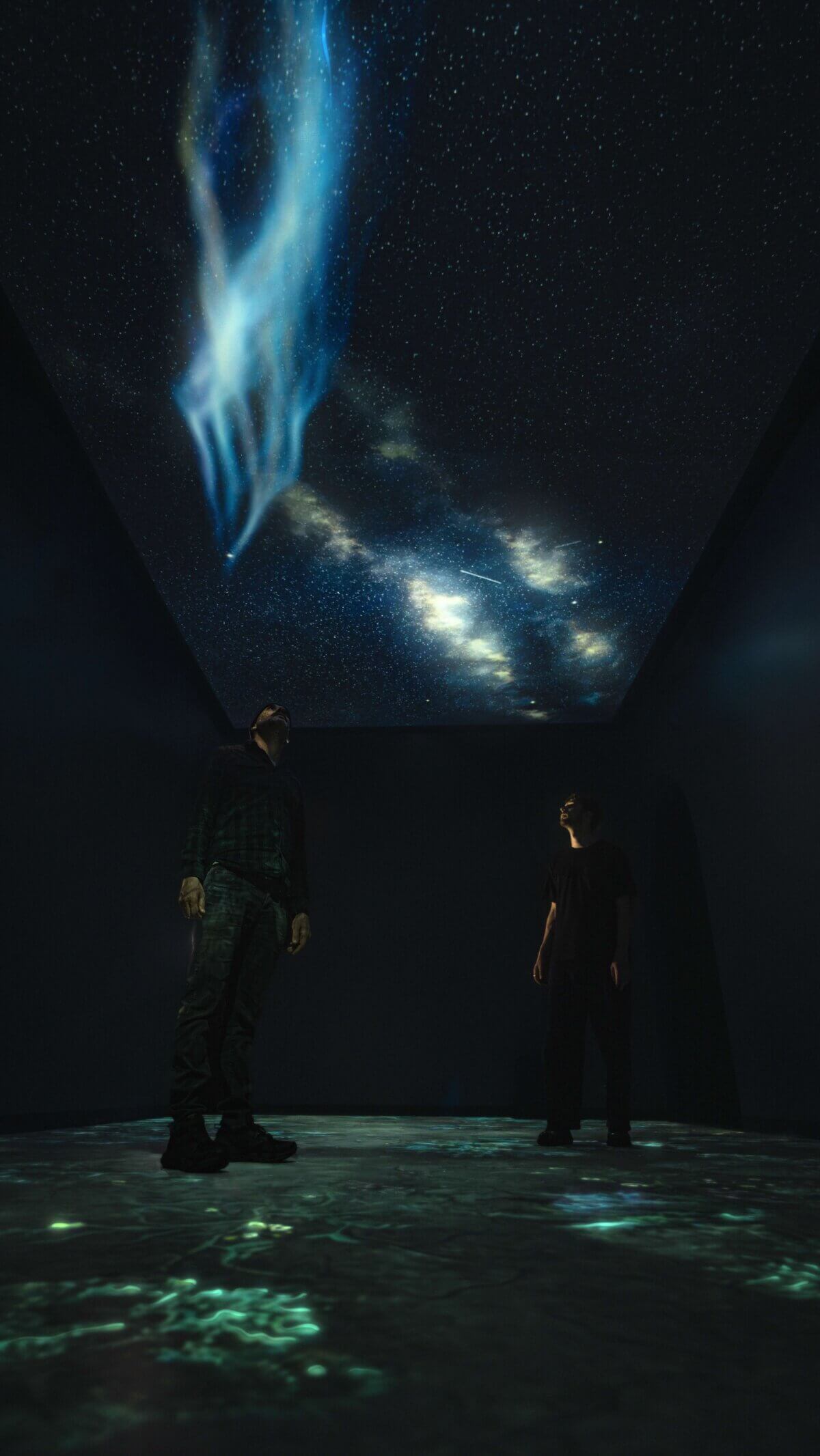
Each environment highlights key regional features. In the forest, fog drifts through Douglas-fir canopies above moss-covered ground, while luminous mycelium networks spread beneath the surface. In the mountains, storm systems form dense cloud layers, and snowpack expands across the terrain, with particles tracing invisible wind currents. Along the coast, bull kelp sways above a rocky seafloor as nutrient upwelling becomes visible through phytoplankton-like movement. In the desert, seasonal skies reveal constellations and meteor traces, while in the city, rainfall and the Broadway Bridge frame river flow below, where salmon appear beneath the surface.
"While Climate of Change / Clima de Cambio is an exhibition rooted in Oregon and the Pacific Northwest, partnering with Tellart gave us an outside perspective that reaffirms the global beauty and impact of our unique region. By immersing themselves with our local landscapes, environments and sounds, they helped us create a space where OMSI visitors can universally connect to the place we call home. "
Akiko Minaga, Vice President of Learning Experiences, OMSI
"Tellart approached this project with curiosity, collaboration, and a deep respect for place. By immersing themselves in the subject and our community, they created a technological artwork that expresses belonging and emotion that connects with visitors in a way that feels distinctly human and entirely unique."
Jeff Duncan, Business Development Manager, OMSI
Client: Oregon Museum of Science and Technology
Tellart (NL) – Experience design & media production
Studio Øraya (NL) – Sound Design
Judy Bluehorse Skelton (Nez Perce/Cherokee) – Indigenous Cultural Advisor
Jeremy FiveCrows (Nez Perce) – Indigenous Cultural Advisor
Daniel Guilfoyle (Seneca) – Indigenous Cultural Advisor