NADA Mobile

Tellart is committed to enabling fluid and iterative design processes for software, hardware and services – that commitment has led us to create a number of sketching tools that allow us to sketch with ubiquitous computing elements as quickly and easily as we would with pen and paper. The latest iteration of these toolkits, NADA Mobile, brings that philosophy to a mobile platform. Using off-the-shelf hardware and simple coding interfaces, even novices can create working prototypes using the full complement of touchscreens, accelerometers, and cameras that are built into the devices.

BluDot Real Good Chair Experiment

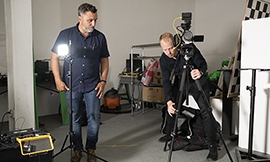
Tellart worked with creative agency Mono and filmmaker Supermarche to create the Real Good Chair Experiment for BluDot, the Minneapolis-based furniture designer. It was to conduct a 21st century curb mining experiment: we left 10 chairs on the streets of NYC in hopes they would be taken to new homes. Tellart handled both the hardware and software implementation of the experience, allowing the chairs to be tracked in real-time using GPS phones and the Google Maps API. In order to make sure the phones would have enough battery life to get all the way to their new homes, we created a custom sleeper switch that activated the GPS only once the chairs were on the move. You may also recognize a couple of our “Chief Scientists” from the Real Good Chair movie. This video is a shorter cut of the full movie by Supermarche - you can watch the full version here. We highly recommend it!

Augmented Reality Experiments

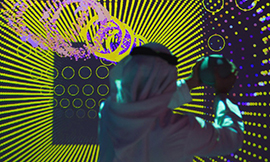
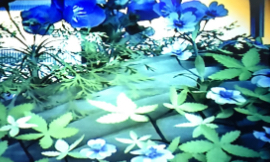
Tellart has worked with augmented or mixed reality experiences to create musical instruments, a holiday card, an enhancement to the classic game of memory, edible (and delicious) fiducials, an online spelling game for kids, and more. We like to experiment with materials and online experiences that bring additional meaning and emotion to the technological possibilities.

What is a Switch

The “What is a switch?” classroom project is a Tellart favorite – it is meant to demystify electronics for design students and artists by using low-cost materials and familiar design tools to explore the concept of an electrical connection. By abstracting electronics to the simple concept of “connected” or “not connected”, the project helps to expand their conception of designing with embedded electronics. What happens when you take the switch away from the wall, out of the plastic casing?

The 100-Mile Photoscape

In order to support and document Seth's century bike ride last Fall for the Leukemia & Lymphoma society, we created an application called "Photoscape". The application can be set to automatically trigger the phone's camera based on either time passed or GPS location, and the resulting time and GPS tagged photos can be compiled into an interactive map-based panorama or time-lapse animation. For Seth's ride, we set the application to take a photo every 1/8th of a mile, and then created a map-based extra-long panorama to document all one-hundred miles. The phone was attached to his bikeframe using a custom holster, and supplied with some extra batteries to make sure it lasted through his eight-hour ride.

Sagmeister Dog Lamp

Once every seven years, Stefan Sagmeister takes a legendary sabbatical to the Sagmeister Experimental Outcamp (Bali, Indonesia), during which he explores whimsical design projects. They came to us asking for some help making their dog lamp ambulatory, and we were honored to oblige. Tellart received the lamp and the robotic toy dogs and went to work on a wireless remote to get them moving and operate the lamp's on/off switch.

Mid Ocean Studio Linear Accelerator

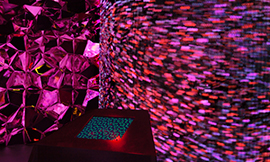
Tellart worked with Mid-Ocean Studios to create the Linear Accelerator, a reactive sculpture in the St. Louis Metro that uses dynamic lighting to mimic platform movement. Each LED node in the sculpture has a custom wireless chip, designed by Tellart, which allows the nodes to receive and display specific color signals. A camera monitoring the activity platform reports back to the control computer, and image processing translates the movement of the crowds and trains into a corresponding change in the sculpture's lighting. The metal web that provides the sculpture's shape also provides power to the LED's, so they are free to communicate and operate completely wirelessly. The sculpture was installed in St. Louis' University City/Big Bend Metro Station, with Tellart personnel working alongside Mid-Ocean Studios and St. Louis city workers to bring it all together.

Umeå

Tellart courses have become a staple at the Umeå Institute of Design (UID, Umeå University, Sweden) where we have taught courses and worked on curriculum since 2005. We have been involved with the Umeå Institute of Design on many levels – from lectures and short courses, to Matt's serving on the Advisory Board of the Interaction Design MA Program. Every year we have created a new physical computing toolkit for the core course, which has acted as critical research for our toolkit development. In addition, we founded and curate the UID Fall Summit where experts in various areas of interaction design come to UID for a day of talks and weekend of workshops. Past attendees have included: Timo Arnall, Adam Greenfield, Matt Jones, Jack Schulze, Jan Christoph Zoels, and David Rose.

Workflow & Information Mapping

Mapping information is an invaluable technique when dealing with design of experiences that have multiple complex touchpoints and a variety of intangible elements. We use mapping and diagramming for all of our projects during the planning and discovery phases - whether they be websites, services, or installations. We use diagrams to tell stories, examine a process or system, document decisions, and create information architectures.

Humana Virtual Me

The “Virtual Me” experience design sought to leverage social networking and recent advances in fitness-tracking technologies to create a truly usable health management tool for consumers. Research and persona generation led us to consider convenient and non-intrusive data-entry as paramount to usability and **that word that means they stick with it**, followed closely by services and experiences that encouraged social support and engagement. It came complete with pedometer games, mobile phone applications that would count your calories based on photo collections, and a more thoughtful approach to the patient/doctor relationship.

RJO Medical Simulation

Tellart worked with the RJO Group to conceptualize and implement the “Reflections of OCD” installation – an installation designed to provide physicians with some insight into the experience of patients afflicted with obsessive-compulsive disorder. In order to bring the “Reflections of OCD” video (created and produced by the RJO Group) to life, Tellart used a combination of a custom lighting control system and a two-way mirror to truly immerse the user in the first person narrative of the film.

Humana Fishtank

The Humana Fishtank prototype shows that health tracking and activity sensing doesn't have to be all about numbers – it provides a fun, community-oriented experience in the form of an office “fish-tank”. Each employee has a fully customizable fish avatar in the tank whose swimming behavior in the virtual world is dictated by its owner's pedometer step count. Our system processes the activity data in real-time, placing fish with higher step counts higher in the tank, and schooling fish with similar activity patterns together.

CIID

The Interaction Design Program at the Copenhagen Institute of Design is a collaborative initiative between CIID and The Danish Design School. Matt was a member of the Visiting Faculty for their pilot year, and Tellart has continued to teach courses on a variety of topics, including mobile hacking and prototyping, a collaborative course on evidence filmmaking (with Jack Schulze and Timo Arnall), and an entirely analogue introduction to interaction design. Teaching topics have included mental models, metaphors, affordances, usability, gestures, networks, sociality, augmentation, iPhone development, prototyping with sensors, and mobile interactions.

Nursing Home of the Future

Together with the Business Innovation Factory, Tellart led a team of faculty, students, researchers, designers, and educators in primary and secondary research around nursing homes – exploring what it is like to live in one, the larger social and economic frameworks they fit into, and where there are opportunities for disruptive technological innovation. Tellart designed and narrated a highly visual presentation documenting the team's process and research results; the materials challenge the assumption that the system can continue to exist as it is, and expose opportunity areas for change.

Nokia Energy Saving Cell Phone Charger

In the spirit of sustainability, Nokia designers observed that the average mobile phone charger consumes 300 milliwatts of “phantom power” – power that is drawn by the charger even when the battery is fully charged. Through a series of discussions, drawings, and prototypes, the teams laid out a number of concepts for the energy saving charger. Tellart worked with them to design and prototype the custom electronics, producing ten working chargers for internal testing.

Arcade Game Remixes

Our interactive mixed-reality frogger hack was made for a Providence Maker Faire event: played by wearing helmets with attached IR LED's, players have to get active to control their virtual frog by moving from side to side along the game space. This was our second large scale arcade game hack - we also created a giant game of pong for a party in New York City (with our friends Zago and BULO), and installed it outside at the 2009 Maker Faire Rhode Island.

Humana Horse Power Challenge

Tellart conceptualized, designed, and created the Horsepower Challenge in response to a question from the Humana Innovation Center: how can we combat childhood obesity using ubiquitous computing technology? The resulting game incorporates online and offline experiences in an effective new way - wireless pedometers worn by the participants drive the online game, and players accrue points based on how many steps they've taken. The more active they are, the faster they power their classroom's school bus in a race around the world - and the more points they get to accessorize their game character.

Nokia Prototyping Tool

Nokia's Design department approached us looking for a way to adopt a more flexible process for sketching future-thinking interface ideas and design concepts. Tellart created several iterations of a prototyping device, going through rounds of development and feedback in order to provide exactly what they needed. The final prototyping tool allowed Nokia Design to remotely run and control interface sketches on the device – involving interaction with accelerometers, potentiometers, full touch-screen, pressure sensors, and more – without having to develop costly native software.

RISD

Since 1999, we have taught courses at the Rhode Island School of Design in the Photography, Graphic Design, Industrial Design and Digital Media programs. Classes have included: Interactive Exhibitions, Interactive Information Design, The Internet of Things, Sketching with Telepresence, Service Design, Design for Disasters, Ubiquitous Computing Experience Design, and Medical Simulation with The Center for Integration of Medicine and Innovative Technology (CIMIT) at Massachusetts General Hospital (MGH). RISD was the original meeting point for Tellart's founders, and is the alma mater of many of our employees.

Kingdom Keepers Augmented Reality

The Kingdom Keepers augmented reality map – though simple – fit in perfectly to the games theme of hunting down secreted virtual content and codes. The game creators, Area|Code, brought Tellart in to implement the 3D map, complete with a message from the Kingdom Keeper's missing friend, two Disney castles, and a visual representation of the players' progress in rescuing the internet from the Overtakers.

Disney G Force

Tellart created the “Operation Planet Savers” game experience in collaboration with Humana, and co-branded with Disney's “G-Force” movie. The social network and game encouraged participants to engage in physical, mental, and social challenges – each completed mission unlocked virtual rewards and brought them a step closer to becoming G-Force secret agents. Local events for participants involved our wii-mote jump rope game, “photo” opportunities with life-size G-Force characters (via augmented reality), and secret agent badges that served as fiducial symbols for the online augmented reality component of the game.

Office Games for Health

We have created a suite of physical activity games for Humana's Innovation Center office space – they use a variety of technologies, and each of them works with the employees' RFID badges so that players can identify themselves for wins and high scores. The Yoga Game Ball transforms a yoga ball into a game controller, taking the classic fun of arcade games (such as Pac-Man and Galaga), and giving them a healthy twist; the Jump-Rope Challenge lets players compete against each other or the high scorer to get the most jumps in a minute; and the Hydration Challenge tracks consumption of water through personalized water bottles and an RFID reader plus scale ensemble at the sink. The prototypes not only encourage good habits and activity among the employees there, but allow them to explore new ideas for interactivity and wellness in an office setting.

Race Against Time

Race Against Time was developed as the next iteration of the Horsepower Challenge game, again using wireless pedometers as the driver for participant progress and rewards through the online game. Race Against Time has an expanded graphic theme and scalable interface, as well as a comprehensive administrative solution for the game, which allows teachers, school administrators, and Humana personnel to take more active roles in monitoring and content provision. The players travel around the world and unlock new characters (each an endangered animal from a new continent) and accessories, gaining points for themselves and their school as they go.

Higher Education Web

We work with many non-profit organizations to create web sites and interactive experiences, often with our positioning and marketing partner, Generation. For nearly ten years we have worked with educational institutions to transition their web presence into something that speaks the school's messages through the most current and relevant technologies available, whether they be media-sharing, social networking, or mobile integration. After years of experience, we know that the best way to arrive at a meaningful and usable end product is through working closely with the campus community – and that's exactly what our process aims to do, from definition of information architecture, through design decisions around colors, fonts, and photography.

Episcopal Church

Tellart first worked with the Episcopal Church several years ago to redefine the information architecture for their Mission Centers content in response to a new internal organizational structure at their administrative offices. Through large printed diagrams of their existing web content, and multiple collaborative meetings with over a dozen internal stakeholders, we were able to identify themes, gaps, and outdated content, and to bring it together into a cohesive and navigable architecture. We are working with the Church again on a number of initiatives to continue expanding media opportunities and offerings.

Hamilton College Virtual Tour

Not just a way to explore the college campus, the Hamilton College Virtual Tour creates a context for the college by introducing it through its place in the World, the Northeast, and the New York upstate region. Tellart created the illustrations of the campus, and Hamilton College personnel are able to manage the content within the tour locations through a custom content management system. They can add photos, videos, audio, and related links to tour locations, making the tour a way to browse messages and deeper content as well as buildings. The tour also allows admissions personnel to craft themed tours of campus locations – such as arts, sciences, or residence tours – and lets users view the campus exploring topics that are meaningful to them.

Device GUI's

Tellart's focus on usability and the human experience of technology brings a new perspective to design for embedded interfaces, such as kiosks, touch screens and mobile devices. We've worked everything from touch-screen interfaces for those with disabilities (with Otis elevator), consulting projects on interfaces for educational children's toys, point-of-sale interfaces for video-based shoe-sizing kiosks, multiple touch-screen mobile applications, and more.

Humana Heartbeat Orchestra

Although there are many advantages to monitoring one's biometric data, the Humana Innovation Center understood that people don't check their biometrics often enough, even with accessible and easy to use devices. Tellart created the Heartbeat Orchestra prototype to explore ways to provide valuable interactivity and enjoyment from interacting with biometric data in a community setting. The Heartbeat Orchestra displays the heart rates of participants through visual and auditory abstractions – a multimedia experience created by Tellart, including the visual interface, original music, and physical installation.

Lectures & Conferences

We firmly believe in staying involved with the international design community – through academics, conferences, lectures, projects, and travel, we keep current with and contribute to what's happening in the world. It's important for us to stay involved locally and globally – we teach and have hosted conferences in Providence, lecture and teach regularly in Europe, and have taught and lectured in China. This video shows the conference Breathalyzer system built by Tellart as part of Picnic's pre-conference hacking workshop.

Humana Grand to Grand

When considering wellness, emotional health and social interaction can be a large determining factor in one's physical health. Along that theme, and in consideration of research and initiatives regarding “Aging in Place”, the Humana Innovation Center postulated that a strong bond between grandparents and grandchildren could lead to healthier lifestyles for both. The Grand to Grand prototype allows these two groups, potentially geographically removed from one another, to communicate in an ambient way with a set of interactive stuffed bears – each with embedded sensors, lights, and speakers. The sensors allowing the bear to sense ‘outgoing' interaction, and the lights and speakers allowing the bear to demonstrate ‘incoming' interaction. The prototype will allow Humana to further explore the benefits of that type of interaction within family groups.